| Thickness | Plies (birch) | Birch700 | Beech740 | Pine600 | Poplar475 | Sheets / m³ | Typical use |
|---|---|---|---|---|---|---|---|
| 4 mm | 3 | 9 kg | 9 kg | 8 kg | 6 kg | 80 | Furniture backs, lining, packaging |
| 6 mm | 5 | 13 kg | 14 kg | 11 kg | 9 kg | 53 | Decorative panels, interior lining, caravans |
| 9 mm | 7 | 20 kg | 21 kg | 17 kg | 13 kg | 35 | Shelves, drawers, light furniture, vehicle lining |
| 12 mm | 9 | 26 kg | 28 kg | 23 kg | 18 kg | 26 | Furniture carcasses, wall panelling, crates |
| 15 mm | 11 | 33 kg | 35 kg | 28 kg | 22 kg | 21 | Furniture, worktop bases, stages and platforms |
| 18 mm | 13 | 39 kg | 42 kg | 34 kg | 27 kg | 17 | Concrete formwork (most common), flooring, furniture |
| 21 mm | 15 | 46 kg | 49 kg | 39 kg | 31 kg | 15 | Heavy concrete formwork, vehicle floors |
| 24 mm | 17 | 53 kg | 56 kg | 45 kg | 36 kg | 13 | Truck and trailer floors, loading ramps |
| 27 mm | 19 | 59 kg | 62 kg | 51 kg | 40 kg | 11 | Trailer floors, heavy-duty flooring |
| 30 mm | 21 | 66 kg | 69 kg | 56 kg | 45 kg | 10 | Very heavy-duty platforms, industrial floors |
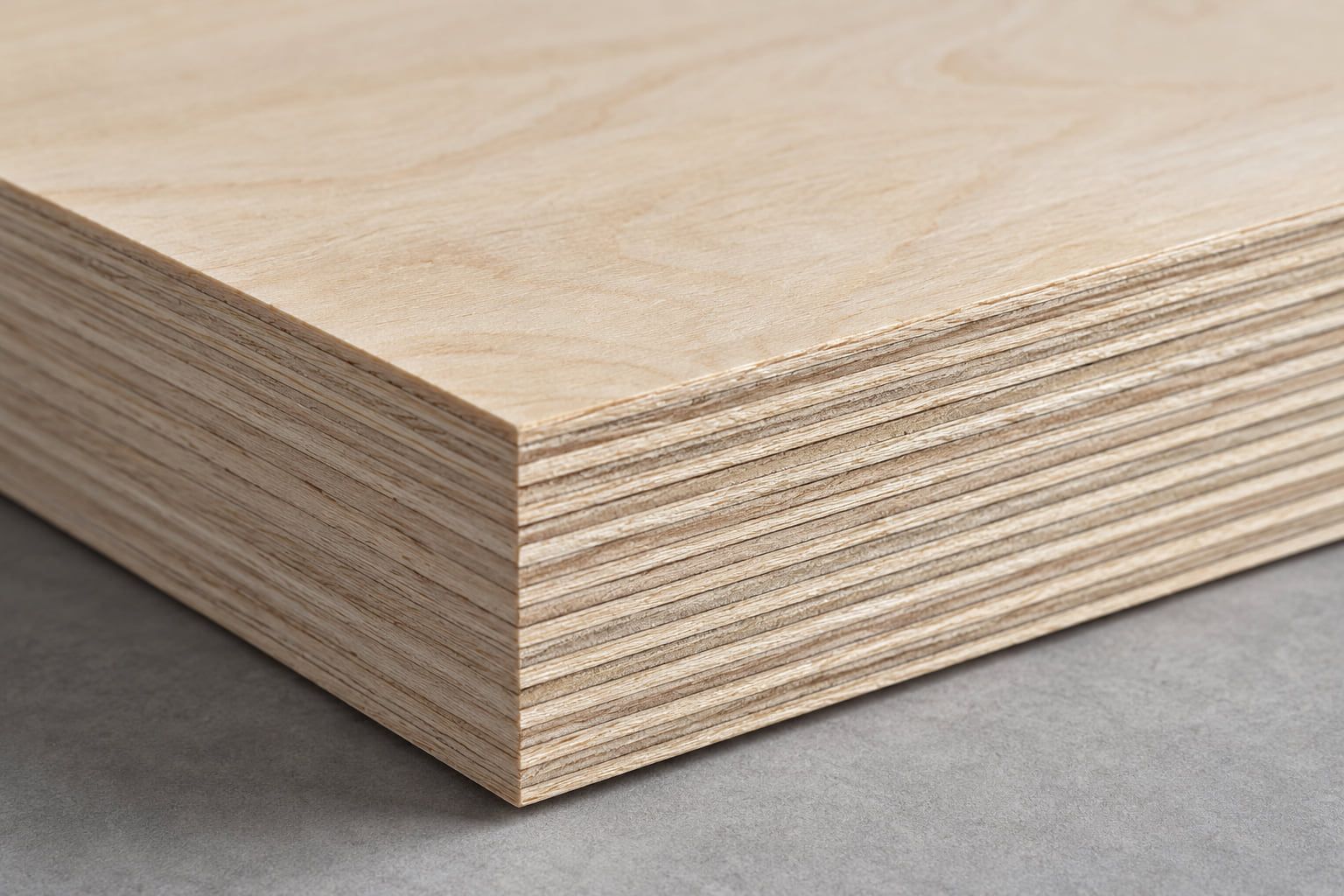
Weights are calculated for an unfilmed 2500 × 1250 mm sheet using average densities. 2440 × 1220 mm sheets are about 5% lighter; film faced panels add roughly 0.8–1.1 kg of film. Ply counts are typical for birch plywood; pine and poplar core products have fewer plies.
Standard plywood sheet sizes
The two most common plywood sheet sizes are 2500 × 1250 mm (European size) and 2440 × 1220 mm (4 × 8 ft). Birch plywood is also widely supplied in the square 1525 × 1525 mm format. Akça Plywood also produces large 3000 × 1500 mm and 3000 × 1250 mm sheets, and custom panels up to 11500 × 2700 mm.
- 2500 × 1250 mm (3.125 m²)
- 2440 × 1220 mm / 4 × 8 ft (2.98 m²)
- 1525 × 1525 mm (2.33 m²)
- 3000 × 1500 mm (4.5 m²)
- 3000 × 1250 mm (3.75 m²)
- Custom sizes up to 11500 × 2700 mm
Face grain direction: long grain vs short grain
Long grain and short grain describe which edge of the panel the face veneer grain runs parallel to. On a long grain panel the grain runs along the long edge; on a short grain panel it runs along the short edge. Even at the same size, the two panels behave differently in use.
Plywood is stiffer and has higher bending strength parallel to the face grain. The direction in which the panel carries load, the orientation of the supports (beams, profiles) and the cutting plan therefore determine which grain direction to choose.
By convention the first dimension indicates the face grain direction: 2500 × 1250 mm means long grain and 1250 × 2500 mm means short grain. We recommend stating the grain direction together with the size when ordering; we can produce long grain or short grain panels on request.
01Long grainGrain along the length
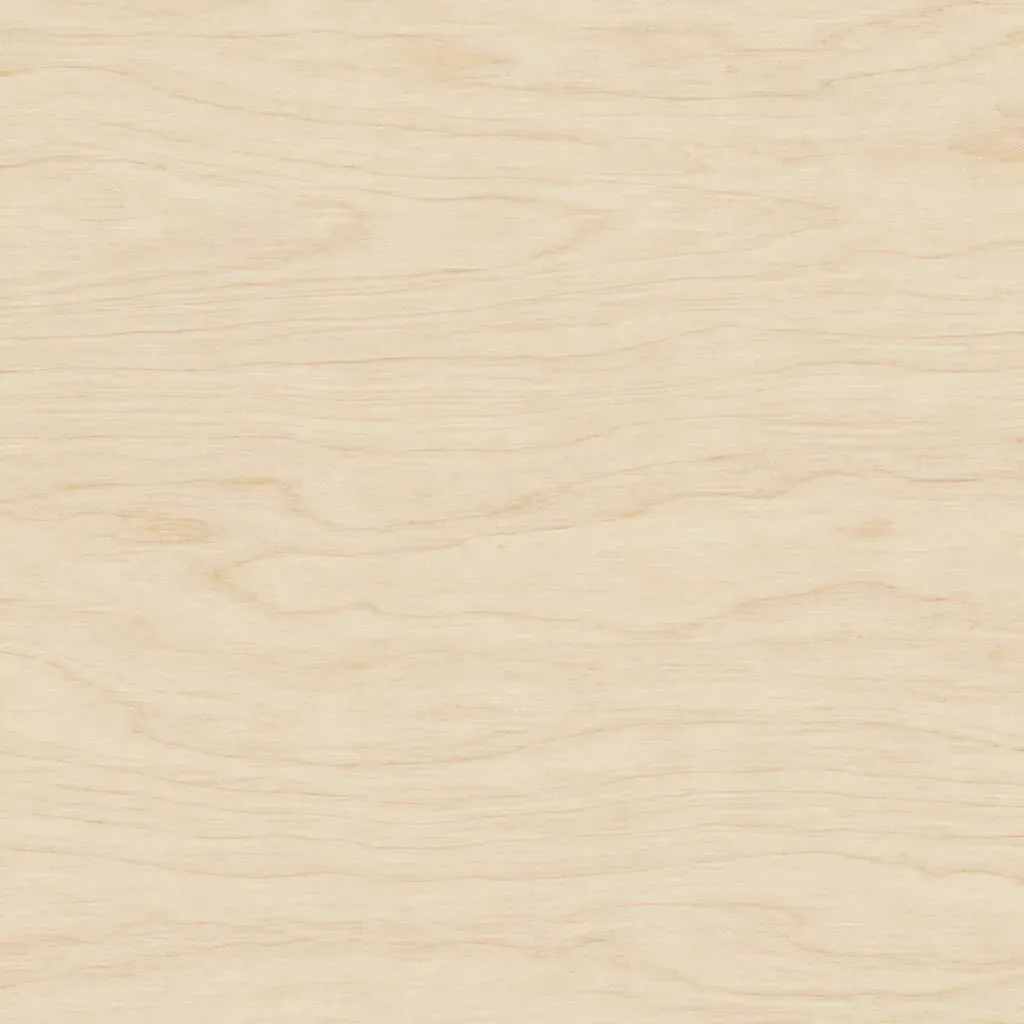
Face grain runs parallel to the long edge.
02Short grainGrain across the width
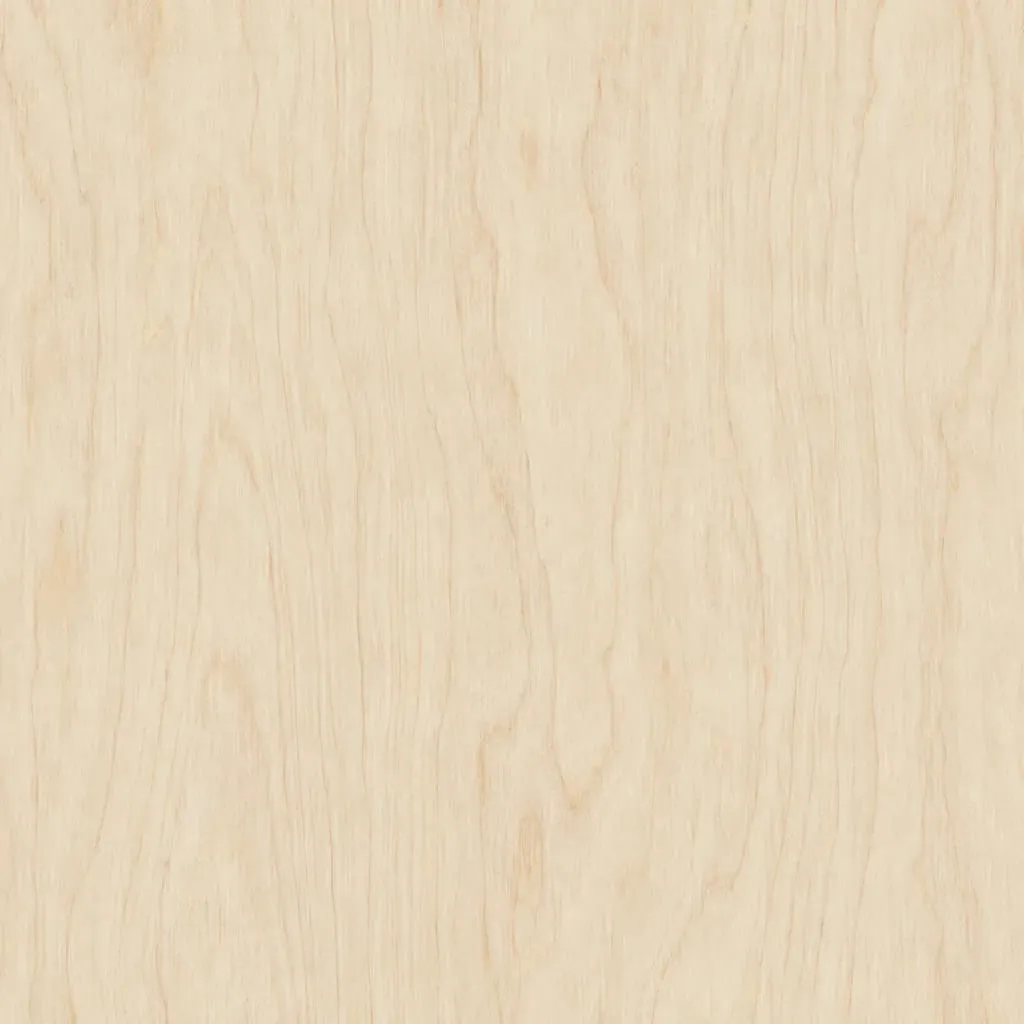
Face grain runs parallel to the short edge.
How to choose the right thickness
Three questions decide the thickness: how much load the panel will carry, how far apart the supports (joists, beams) are, and whether it will be exposed to moisture or water. 18 mm is the standard for concrete formwork, 18–30 mm for vehicle floors, 15–18 mm for furniture carcasses and 3–9 mm for lining work.
As thickness increases, so do ply count and load capacity — and weight. At the same thickness, birch plywood has more plies and higher density than pine plywood, which means greater strength and a smoother surface.
Ultra-thick plywood (60–100 mm)
Our standard production range is 3–60 mm; on request we produce ultra-thick plywood up to 100 mm. Ultra-thick panels are used for heavy-duty platforms, machine and jig tables, industrial flooring and special projects that require very high load capacity.
Weight rises quickly at these thicknesses: a 2500 × 1250 mm sheet of 100 mm birch plywood weighs about 219 kg. Please take this into account when planning shipping, handling and installation.
Thickness tolerance
Plywood thickness is nominal; a tolerance of ± 0.5 mm applies in production. For formwork and flooring, using panels from the same batch minimises height differences between panels.
Frequently asked questions
01How much does an 18 mm plywood sheet weigh?
A 2500 × 1250 mm sheet of 18 mm plywood weighs approximately: birch 39 kg, beech 42 kg, pine 34 kg, poplar 27 kg. Film faced sheets add about 1 kg of film.
02What thicknesses does plywood come in?
Standard plywood thicknesses are 4, 6, 9, 12, 15, 18, 21, 24, 27 and 30 mm. Akça Plywood produces from 3 mm up to 60 mm, and ultra-thick plywood up to 100 mm on request.
03How many plywood sheets are in 1 m³?
In the 2500 × 1250 mm size, 1 m³ is about 17 sheets of 18 mm, 15 sheets of 21 mm and 26 sheets of 12 mm plywood. See the chart above for other thicknesses.
04What is the most common plywood thickness?
18 mm film faced plywood is the most common thickness in construction for concrete formwork. 18 mm is also standard for furniture, while vehicle floors typically use 18–30 mm.
05Do you produce 3000 × 1500 mm plywood?
Yes. In addition to standard sizes we produce 3000 × 1500 mm and 3000 × 1250 mm sheets, and custom panels up to 11500 × 2700 mm.
06What do long grain and short grain mean?
They refer to the grain direction of the face veneer. On a long grain panel the grain runs parallel to the long edge, on a short grain panel parallel to the short edge. The first dimension usually indicates the grain direction: 2500 × 1250 mm is long grain, 1250 × 2500 mm is short grain.